

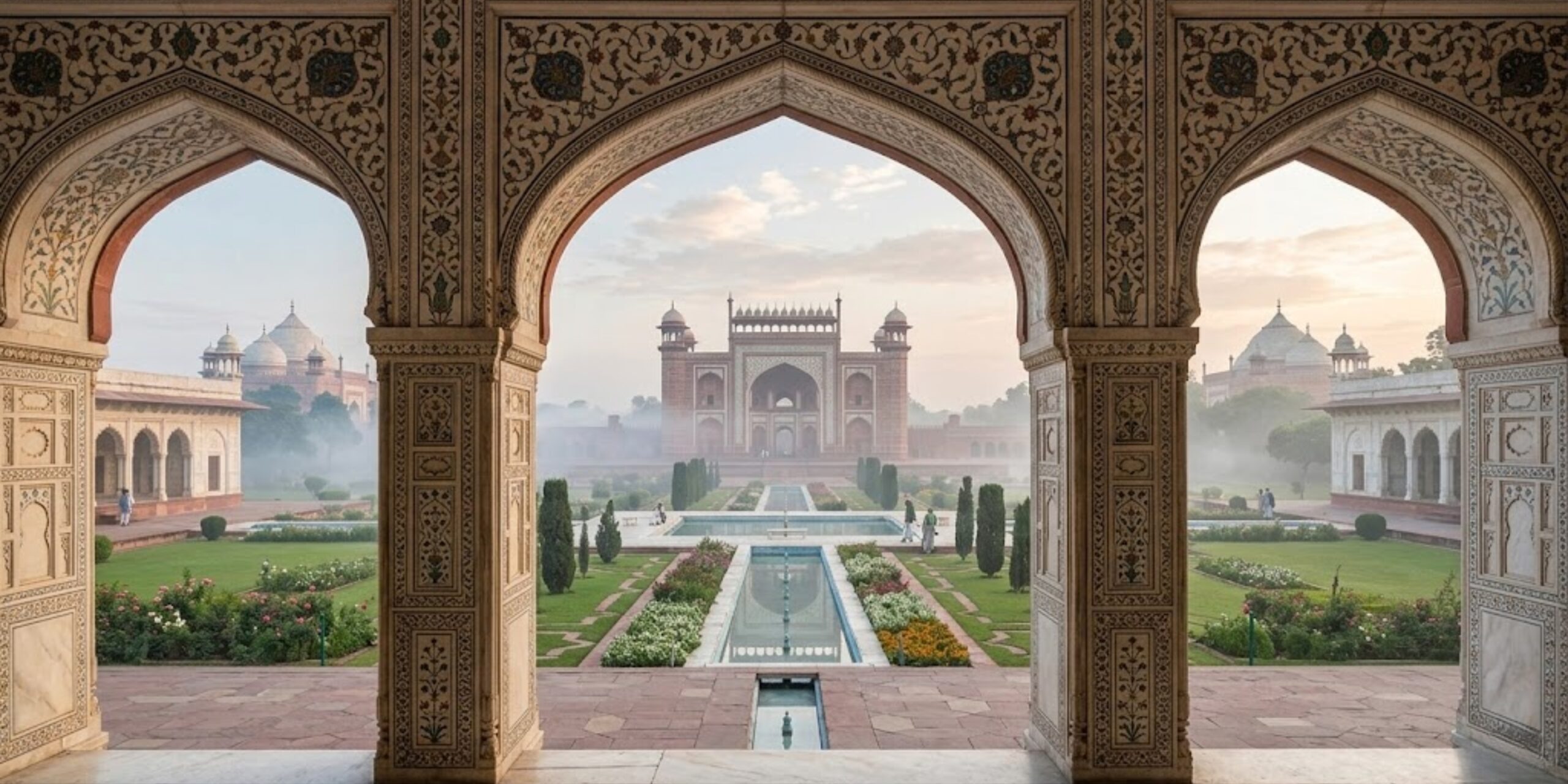
Mughal architecture is more than just beautiful buildings; it is a visual representation of a powerful empire’s identity. Combining Persian, Indian, and Islamic styles, the Mughals created a unique aesthetic that still defines the landscape of South Asia today.
From the grand scale of the Badshahi Mosque to the delicate symmetry of the Taj Mahal, Mughal structures were designed to reflect “Paradise on Earth.” Key features like the Charbagh (four-part garden), the Chhatri (domed canopy), and the use of red sandstone and white marble became hallmarks of their reign.
Understanding the history of these structures helps us decode the political and cultural priorities of the emperors. At Danistnama, we explore how these monuments tell the story of an era where art and power were perfectly intertwined.